


A mid taper fade Asian haircut pairs gradually shortened sides with a top that suits straight, dense hair. It looks clean at work, stays easy to style, and works with trends like the Korean two-block, textured fringe, and quiff.
Below you will find 15 ideas, how to match one to your hair and face, the exact words to use with your barber, and a simple upkeep plan.
What Is a Mid Taper Fade Asian Haircut?
A mid taper fade is a haircut where the sides and back get shorter in steps, starting around the temple. A taper keeps some length at the bottom, so it looks softer than a skin fade.
“Asian haircut” is a loose label. It usually means a cut designed for hair that is straight, thick, or coarse, which is common among many East and Southeast Asian men. Hair varies a lot from person to person, so use it as a starting point, not a rule.
In short: short, blended sides plus a top cut to control weight and add shape.
Why Is This Haircut So Popular in 2026?
- Korean style influence: K-drama and K-pop looks keep two-block and fringe cuts in demand.
- Low risk: a mid taper is neater than a low taper and gentler than a high skin fade.
- Easy to wear: it suits school, office, and weekends.
- Good with dense hair: it removes bulk from the sides without losing the top.
- Flexible: the same taper works under a fringe, quiff, or slick back.
15 Best Mid Taper Fade Asian Haircut Ideas
Classic and Textured Styles
1. Classic Mid Taper Fade
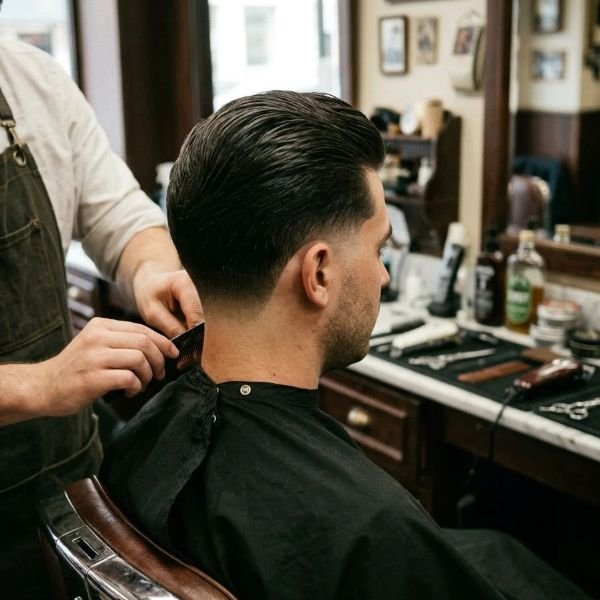
Short sides, a neat top about 2 to 3 inches long, and a side or natural part. Ask for a clean blend with no hard line. It is the safest choice for first-timers.
2. Textured Top Mid Taper
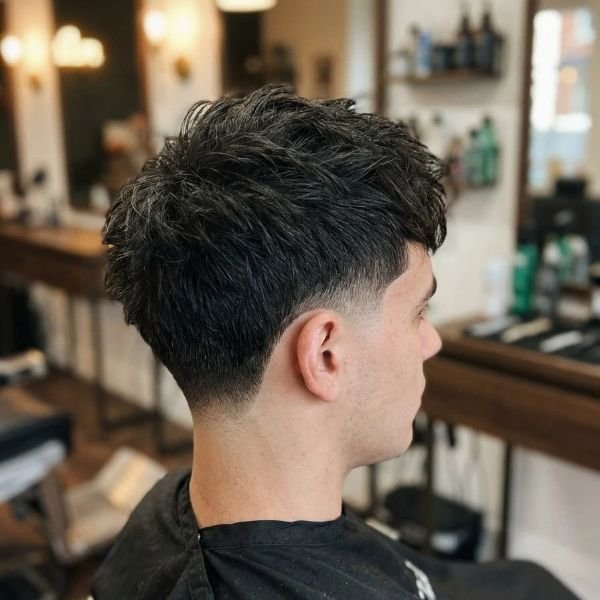
The top is point cut so it breaks into pieces. Use clay or paste for movement. Straight hair needs this cutting technique or it falls flat.
3. Messy Mid Taper Fade
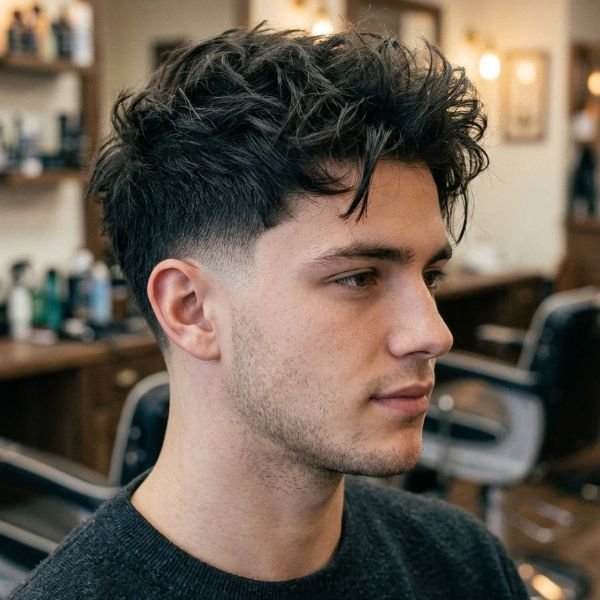
A loose, tousled finish with a relaxed shape. Style with sea salt spray and a matte product, and skip the comb.
Korean-Inspired and Two-Block Styles
4. Korean Two-Block Mid Taper
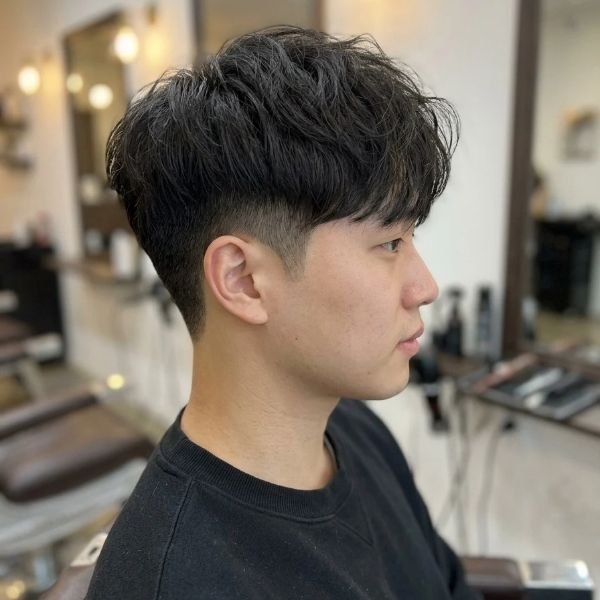
A two-block cut keeps the top longer and the sides and back much shorter, with a clear step between them. Adding a mid taper softens that step so it grows out better.
5. Middle Part Mid Taper
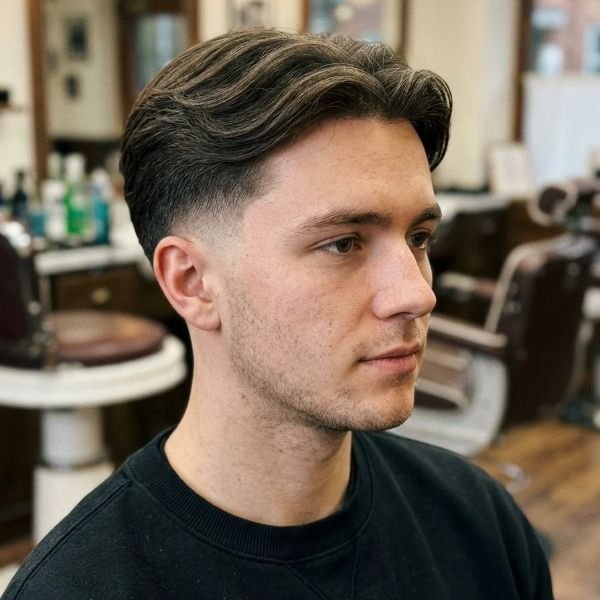
The top is parted down the center and falls to both sides. It suits oval and long faces and works best on hair with some natural bend.
6. Curtain Fringe Mid Taper
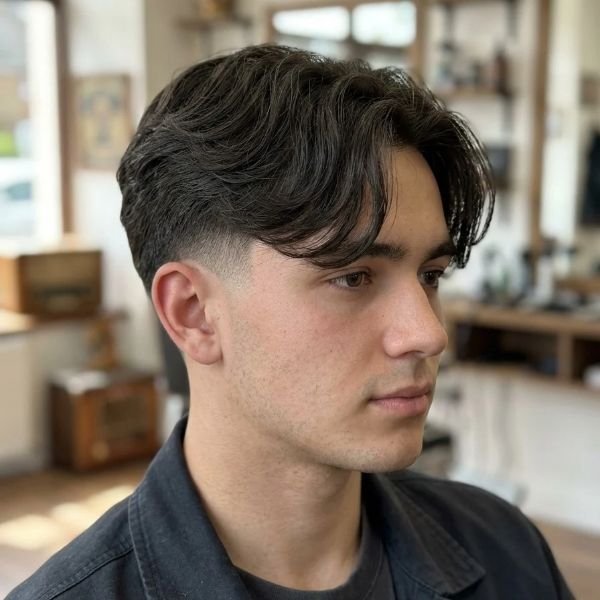
The fringe parts in the middle and curves outward like curtains. Keep it around eyebrow to cheekbone length and add a light cream for softness.
Fringe and Forward Styles
7. Textured Fringe Mid Taper
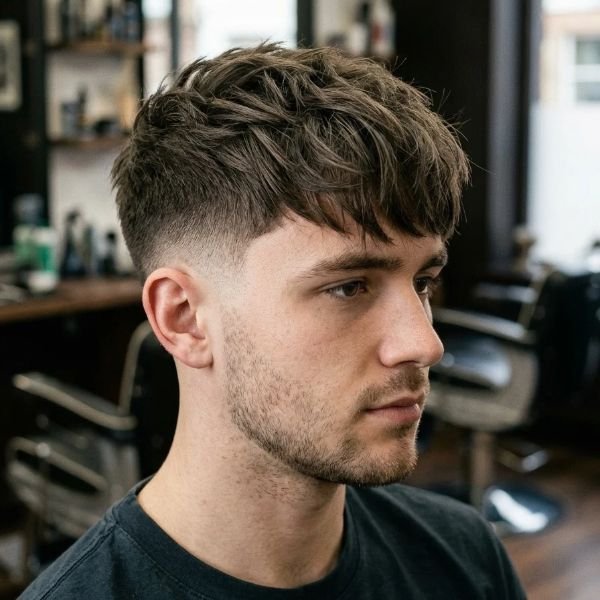
The top is brought forward and broken into choppy pieces. It is easy to dress up or down, and it hides a high forehead.
8. Short Fringe Mid Taper
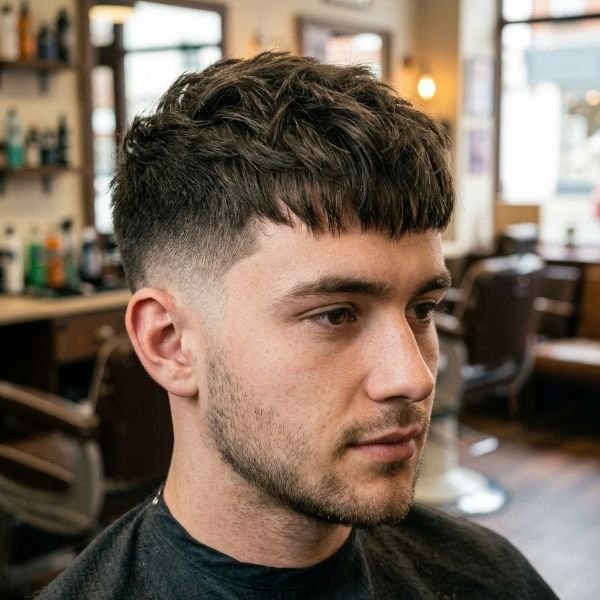
A shorter fringe just above the brow. It is tidy, low effort, and good for round or square faces.
Volume and Styling Styles
9. Quiff Mid Taper
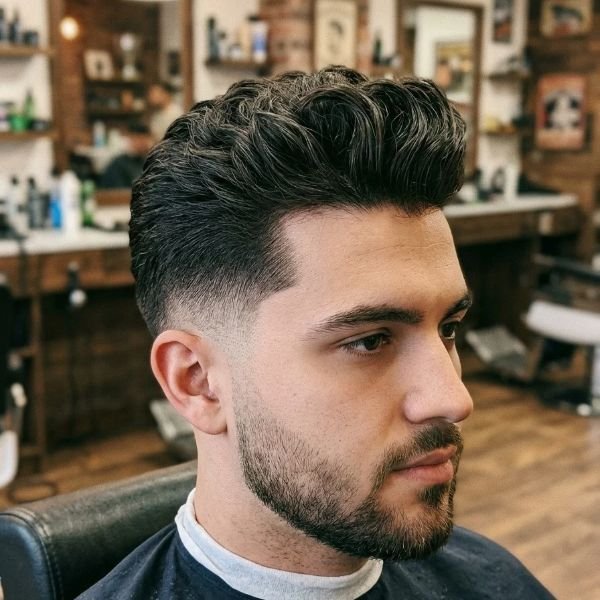
The front is lifted up and back for height. Blow dry upward and set with a medium-hold clay. It adds length to a round face.
10. Fluffy Mid Taper
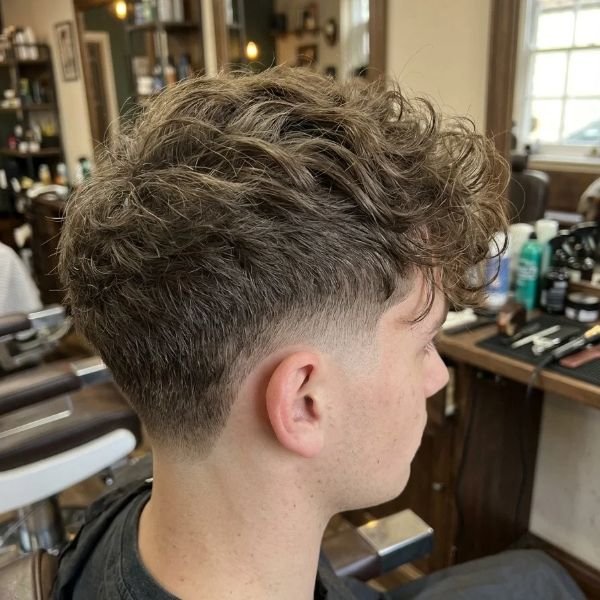
A soft, airy top with lots of lift and no heavy product. Ask for layers so the hair can move.
11. Blowout Mid Taper
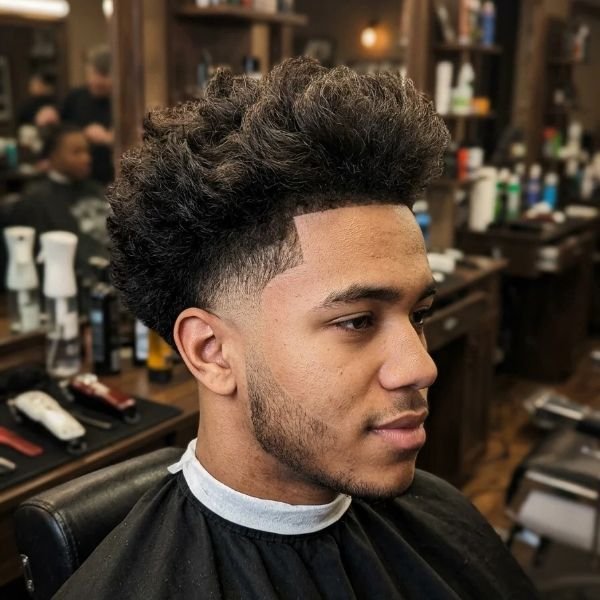
A blow-dried top with volume at the roots. It works well for fine hair, because the dryer creates body that product alone cannot.
Clean and Longer Mid Taper Fade Asian Styles
12. Slick Back Mid Taper
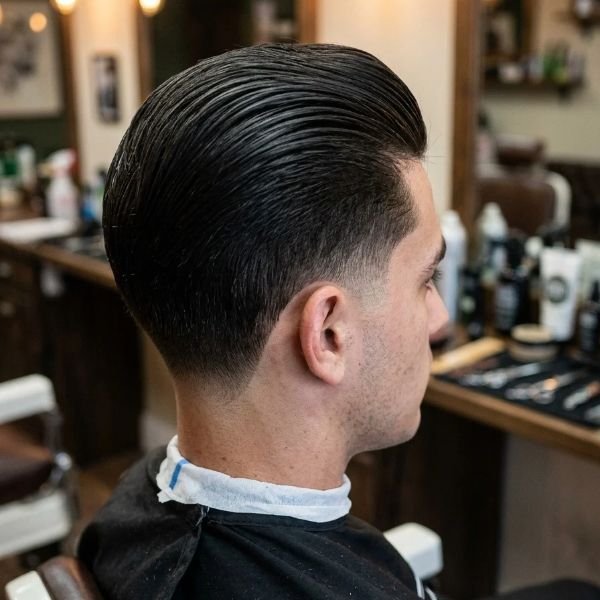
The top is combed back with a light pomade. It looks polished, and the taper keeps the sides slim. Thick straight hair holds this style well.
13. Side Part Mid Taper
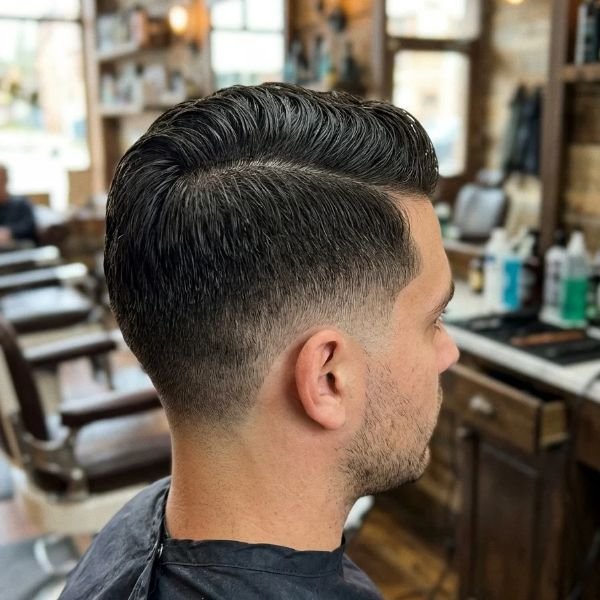
A defined part with a clean taper. It is the usual pick for interviews and office settings.
14. Long Top Mid Taper
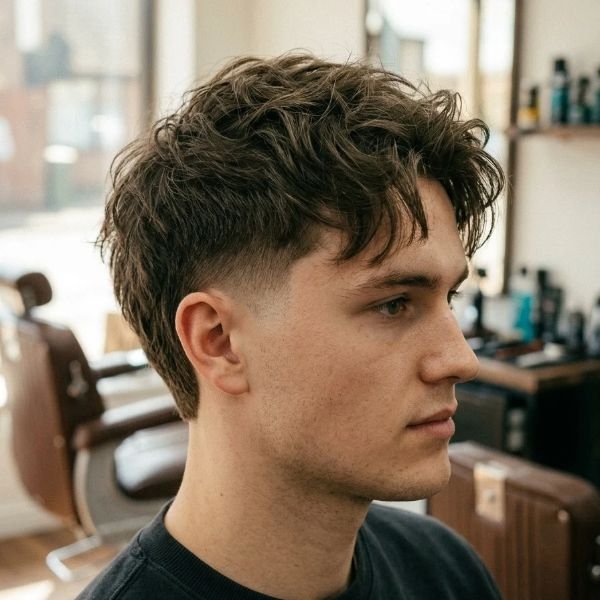
Keep 4 inches or more on top for styling choices. Ask for internal layers to remove weight, or the top will sit heavy.
15. Low-Volume Natural Mid Taper
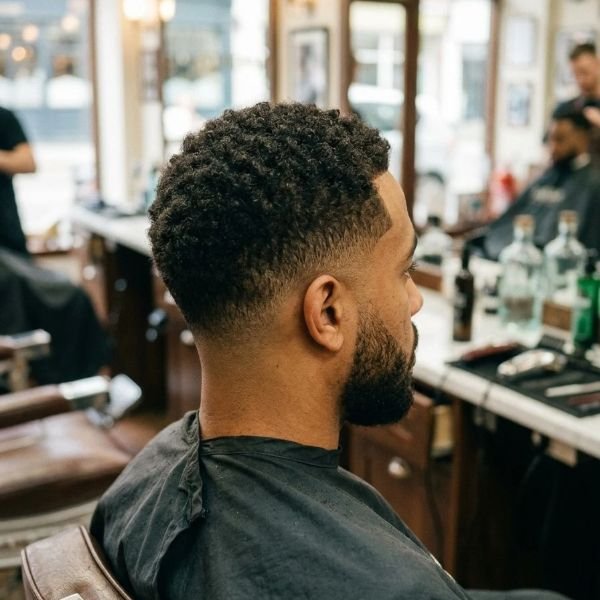
The top lies close to the head with only a little texture. It is the lowest maintenance option and a good fit for thick, straight hair that does not need extra height.
How to Choose the Right Style for Your Hair Type
Straight Hair
Straight hair shows clean lines but can fall flat. Choose textured tops, quiffs, or fringes, and ask for point cutting.
Wavy Hair
Natural movement means less styling work. Try a messy, fluffy, or curtain style.
Thick Hair
Thick hair needs weight removal. Ask your barber to thin the inside of the top and use layers. Slick back and low-volume cuts work well.
Fine Hair
Fine hair loses shape quickly. Pick a shorter top, a blowout, and a light styling powder for lift.
Medium-Length Hair
Medium lengths suit two-block, middle part, and curtain fringe cuts. They give you room to style and room to change.
Best Mid Taper Fade Asian Styles by Face Shape
Oval Face
Most cuts work. Try a middle part or classic taper.
Round Face
Add height with a quiff or textured top. Avoid heavy, wide fringes.
Square Face
A soft, textured fringe takes the edge off a strong jaw.
Heart Face
A side-swept or curtain fringe balances a narrow chin.
Long Face
Keep the top shorter and use a fringe to reduce height.
Diamond Face
A textured fringe adds width at the forehead. Keep the sides slim.
Rectangular Face
Avoid extra height. A side part or short fringe keeps proportions even.
Best Mid Taper Fade Asian Styles by Age Group
Teenagers
Two-block, textured fringe, and messy cuts are popular. Choose styles that fit school rules and take under five minutes.
Young Men
This age group suits quiffs, blowouts, and fluffy cuts. It is a good time to try bolder styles.
Professional Men
Classic, side part, and slick back cuts look polished. Keep the fringe above the brow and use matte products.
How to Ask Your Barber for a Mid Taper Fade
Use this short script:
- “I want a mid taper starting at the temple.”
- “Go down to a #1 or #2 at the bottom, not skin.” (Say skin only if you want it.)
- “Keep about [2 to 4] inches on top.”
- “Point cut the top for texture and remove weight from the inside.”
- “Blend the taper into the top with no hard line.”
- “Natural neckline, please.”
Bring front, side, and back photos. Also mention your cowlick, hair direction, and how long you want to spend styling.
Mid Taper Fade Tutorial: Video Guide
Add a short video here that shows the taper being blended around the ear and neckline. A good video shows the clipper guard changes, the blending step, and the final styling. Use clear alt text and a caption that includes the keyword.
Common Mid Taper Fade Mistakes to Avoid
- Asking only for “a fade.” Say mid taper and name the bottom length.
- Choosing a high skin fade by accident. It shows growth faster.
- Ignoring hair direction. Straight, strong hair can stick out at the sides.
- Using heavy gel. It flattens texture.
- Waiting too long between cuts. The sides lose shape first.
Common Barber Mistakes to Avoid
- A hard line between the taper and top. Ask for blending.
- Cutting the top too short. Straight hair needs enough length to show texture.
- Skipping thinning on dense hair. The top stays bulky.
- Starting the taper too high. It may look like a high fade.
If something is wrong, ask for a quick fix before you leave.
How to Maintain a Mid Taper Fade Asian Haircut
Taper Maintenance
Visit your barber every 3 to 4 weeks. The neckline and temples show growth first, while the top can wait longer.
Daily Styling
Use a pea-sized amount of matte clay or paste on slightly damp hair. Blow dry the roots for lift.
Shampoo and Conditioner
Wash two to four times a week. Condition the ends if your hair is dry.
Heat Protection
Use a heat protectant before blow drying or flat ironing.
Satin Pillowcase
A satin pillowcase reduces friction, which can help limit frizz and flattened hair overnight.
Sulfate-Free Products
Sulfate-free shampoos are gentler and may help dry or colored hair. They are not required for everyone.
Mid Taper Fade vs Other Haircuts
Mid Taper Fade vs Low Taper
A low taper starts near the ear and looks softer. A mid taper starts around the temple and shows more contrast.
Mid Taper Fade vs Mid Fade
A taper keeps some length at the bottom. A mid fade usually goes closer to skin and looks sharper, but needs more frequent touch-ups.
Mid Taper Fade vs Two-Block
A two-block is a style with a long top and a short back and sides. A mid taper is a blending method that can be used inside a two-block cut.
Mid Taper Fade vs Undercut
An undercut has a hard, disconnected line between a long top and short sides. A taper blends smoothly between the two.
Read more: Mid Taper Fade Buzz Cut — Styles, Clippers & At-Home Guide (2026)
Frequently Asked Questions
Is a mid taper fade good for Asian hair?
Yes. It removes bulk from the sides and keeps the top shapeable.
What is the best style for thick Asian hair?
Layered tops, slick backs, and textured fringes work well when the barber removes weight inside.
Does a mid taper work with straight Asian hair?
Yes. Ask for point cutting and use texture products so the top does not fall flat.
How often should I maintain the taper?
Every 3 to 4 weeks keeps the sides and neckline clean.
Can I get a mid taper with a two-block haircut?
Yes. A taper softens the step between the long top and the short sides.
Is a mid taper better than a mid fade?
Neither is better. A taper is softer and easier to grow out, while a fade is sharper.
How do I style thick straight Asian hair?
Start with damp hair, blow dry the roots, then work in clay or paste and shape with your fingers.
Does a mid taper fade work for Asian hair?
Yes, and it suits many textures, from straight to wavy.
How do I style a mid taper fade on thick Asian hair?
Thin the inside of the top at the barber, then use a matte clay and a quick blow dry.
How often should I get a taper touch-up for Asian hair?
Every 3 to 4 weeks, or sooner if you like a very clean neckline.
About the Author
[Add your name, role, and credentials here. For example: “Written by [Name], a licensed barber with X years of experience.” A real author bio supports E-E-A-T.]
Conclusion
A mid taper fade is a flexible base for many Asian haircut styles. Pick a top that fits your hair type and face shape, ask your barber for a mid taper with a clear bottom length, and ask for texture and weight removal on thick hair.
Keep up regular trims, use matte products, and protect your hair from heat. Do that and your cut will look sharp from the first day to the last.

Liam Joseph Miller is a fashion and lifestyle writer passionate about modern trends, personal style, outfit inspiration, and everyday fashion. He enjoys creating simple, practical content that helps readers discover new looks, explore current trends, and express their unique sense of style with confidence.