


A mid taper fade mullet keeps the length at the back and top while the sides shrink neatly from the temple down to the nape.
The taper starts at mid height, about one to two inches above the ear, so the cut looks sharp without the harsh contrast of a skin fade.
It suits straight, wavy, curly and thick hair, works for a school day or an office, and grows out more gracefully than most mullets. Below you will find eight proven styles, hair type and face shape matches, exact guard numbers for your barber, and a maintenance plan that keeps the blend clean.
Everything here is built for men who want the mullet without the 1980s baggage.
Mid Taper Fade Mullet Explained: What Makes This Combo Work
A mullet is short at the front and sides and longer at the back. A taper is a gradual shortening of hair from longer on top to shorter at the neckline and around the ears.
The “mid” part tells your barber where that shortening begins. A low taper starts near the ear and nape, a high taper starts up near the temple and crown, and a mid taper sits between them.
Here is why the mix works:
- Softer join: The taper removes the harsh step between short sides and long back that defined the old mullet.
- Controlled bulk: Shorter sides stop the hair from puffing out around the ears.
- Balanced contrast: You get a visible fade without exposing as much scalp as a high skin fade.
- Flexible length: The back can stay a few inches long or reach the collar.
Luxe.digital, a men’s style publication, describes the modern mullet as a mullet with the join blended. A mid taper is one of the easiest ways to achieve that.
Why It’s Everywhere in 2026
The mullet has moved from joke to mainstream, and the mid taper version is its most wearable form. Three things keep it popular.
- Social media: Short videos showing the back view and the blend spread new cuts fast.
- Barber skill: Fades and tapers are now core barbershop skills, so more barbers can cut the blend cleanly.
- Wearability: A tapered mullet looks intentional in a classroom, a gym or an open plan office.
Men also like that the cut works with natural texture. Curls, waves and thick hair all give the back section its shape.
Pros and Cons: What You’re Signing Up For
| Pros | Cons |
| Clean sides with length where you want it | Needs regular taper touch ups |
| Works on most hair types | Back section can look messy if neglected |
| Easy to dress up or down | Needs a barber who understands blending |
| Grows out smoothly | Growing the back takes months |
| Gives personality without extreme contrast | Can look dated if the back is too thin and wispy |
8 Best Mid Taper Fade Mullet Styles
Classic Cuts: The Everyday Options
1. Classic Mid Taper Mullet
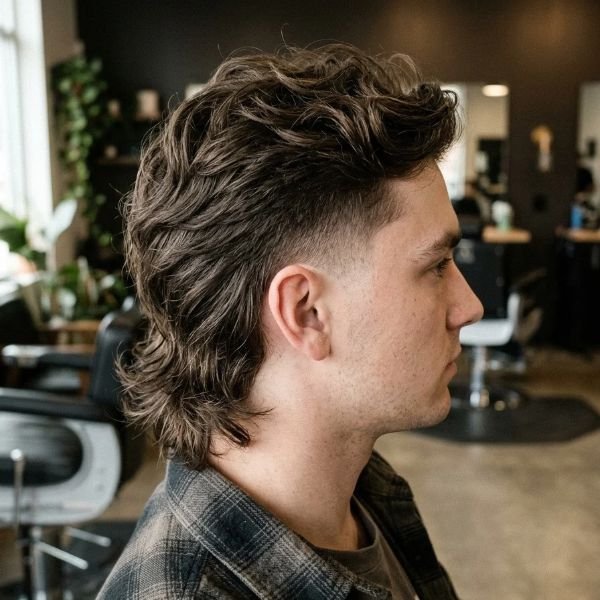
This is the baseline. The sides taper from mid height, the top stays medium, and the back reaches the nape or collar. It needs little product and is a safe first mullet.
Ask for it with a natural neckline so it grows out neatly.
2. Wavy Mid Taper Mullet
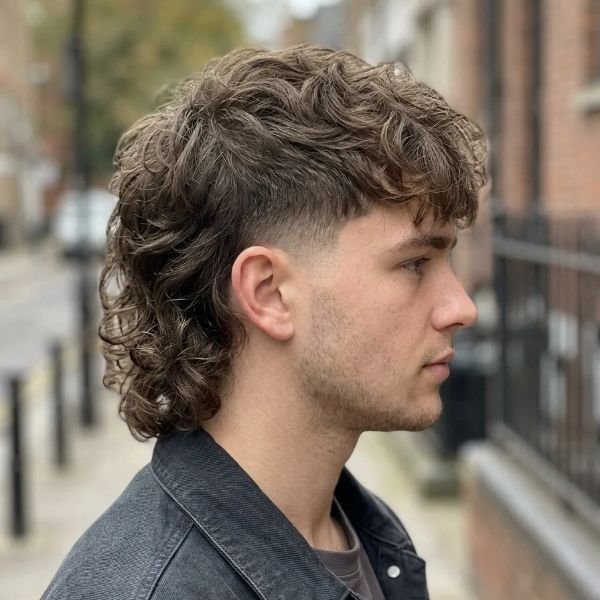
Waves give the back section natural movement. The taper keeps the sides from widening, so the shape stays narrow and tidy.
Use a light cream or sea salt spray on damp hair and let it dry naturally.
3. Curly Mid Taper Mullet
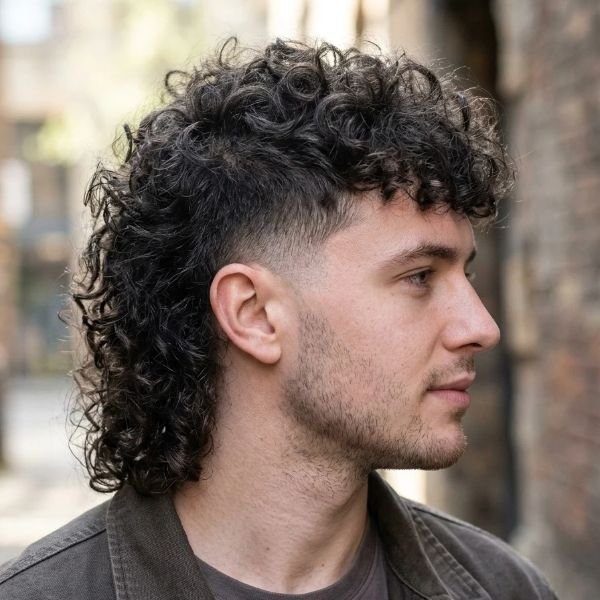
Curls add volume and a strong silhouette. The mid taper trims the sides so the curls sit on top and at the back instead of ballooning outward.
Keep curls hydrated, because dry curls look frizzy and lose their definition.
Textured Cuts: More Movement, More Attitude
4. Textured Mid Taper Mullet
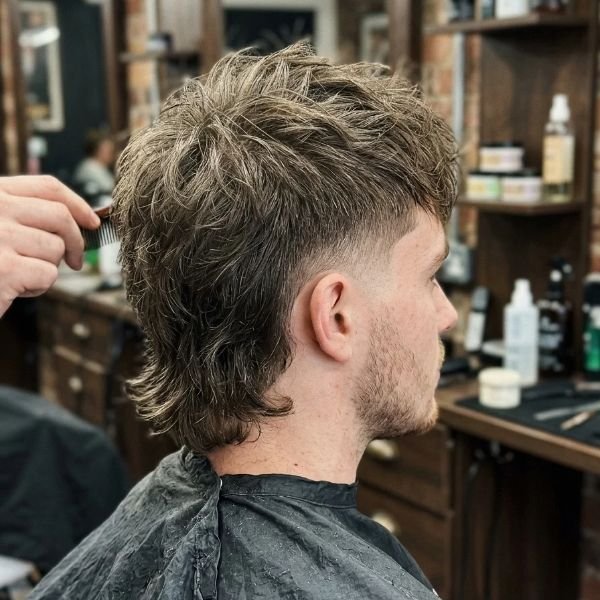
Here the top is cut with choppy layers for a lived in finish. Matte clay or paste separates the pieces.
It suits straight to wavy hair that needs help looking full.
5. Shaggy Mid Taper Mullet
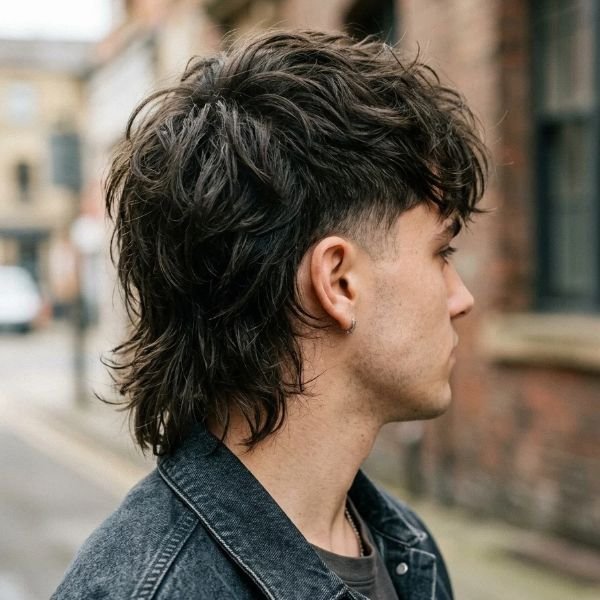
Longer, heavily layered hair blends into a mid taper on the sides. It is the most relaxed version and has a rock inspired feel.
It needs hair with enough density to hold layers, and regular trims to stop the ends going stringy.
Detail Work: Built for Barbers Who Cut
6. Mid Taper Mullet with Scissorwork
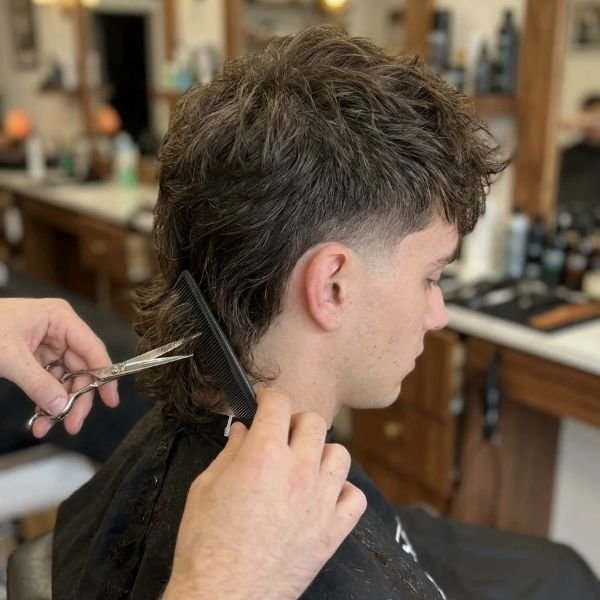
Instead of relying only on clippers, the barber uses shears to blend the top into the back. The result is softer and more precise.
If you choose this one, find a barber who shows scissor over comb work in their portfolio.
7. Mid Taper Mullet with Fringe

A short or textured fringe falls across the forehead while the sides and back stay tapered. The front adds a youthful look and can soften a strong forehead.
Keep the fringe above the eyebrows so it does not look heavy.
Business-Friendly Versions
8. Business Mid Taper Mullet

The back is kept shorter, often just touching the collar, and the top is combed or lightly styled to one side. The mid taper keeps the sides neat enough for most offices.
It gives you the shape of a mullet while still looking polished in meetings.
Choosing by Hair Type: What Actually Holds the Shape
Straight Hair
Straight hair shows every line, so a clean blend matters. It can look flat, so ask for texture on top and a slightly longer back to add weight. Use a light texturizing spray for grip.
Wavy Hair
Wavy hair is the easiest to wear in this cut. The taper reduces side bulk and the waves give the back its shape. Avoid heavy gel, which weighs waves down.
Curly Hair
Curls hold the mullet shape well, but they shrink as they dry. Ask your barber to cut curly hair dry or damp so you can see the real length. Use a leave in conditioner and a curl cream.
Thick Hair
Thick hair needs controlled weight. Ask for internal layering or thinning shears so the top and back do not stack into a bulky triangle. The taper does much of the work on the sides.
Face Shape Matchups
The same cut can look different on different faces. These quick pairings help you decide.
Oval Face
Oval faces suit almost every version. Try the classic or textured style and keep the sides at a medium taper.
Round Face
Add height on top and keep the sides tight. A textured mullet with a slightly higher taper lengthens the face.
Square Face
Soft texture and a wavy or shaggy back soften a strong jaw. Avoid very sharp, blocky tops.
Heart-Shaped Face
A fringe balances a wide forehead. Keep the back a little fuller to balance a narrower chin.
Long Face
Avoid too much height on top. A fringe and a fuller back shorten the look of the face.
Diamond Face
A fringe or side swept top reduces the focus on wide cheekbones. Keep the sides tapered but not too tight.
Rectangular Face
Go for width instead of height. A textured top with a fringe and fuller sides keeps the proportions balanced.
Age Group Breakdown
Teenagers
Teens can experiment with the shaggy or fringe versions. Check school dress codes first, since some schools have rules about length. A mid taper keeps the cut neat enough to pass most of them.
Young Men
This group can wear any style. The textured and scissorwork versions give the strongest look, and they pair well with a beard.
Professional Men
The business version is the safest. Keep the back above or just at the collar and use a light pomade or cream for a neat finish.
Talking to Your Barber: The Exact Guard Numbers
| Guard | Length (inches) | Length (mm) |
| #1 | 1/8 | 3 |
| #2 | 1/4 | 6 |
| #3 | 3/8 | 10 |
| #4 | 1/2 | 13 |
| #6 | 3/4 | 19 |
| #8 | 1 | 25 |
- Taper start: A mid taper beginning about one to two inches above the ear.
- Sides, bottom: Start with a closed clipper or #0.5, then blend up through #1, #2 and #3.
- Sides, upper: Blend into the longer hair on the sides with a #4 or scissor over comb.
- Neckline: Ask for a natural or tapered neckline, not a blocked one.
- Back: Leave the length, and ask for a clean shape or light layering.
Bring a photo from the front, side and back. It removes the guesswork about where “mid” starts.
Video Guide: Watch the Blend in Action
Add a short barber tutorial here that shows the taper starting point, the blend through the guard numbers, and the back section being shaped. Pick a video that clearly shows the side and rear angles.
Common Mistakes That Ruin a Mid Taper Mullet
Most bad mullets come from a handful of avoidable errors. Check this list before you sit in the chair.
- Starting the taper too high: A mid taper that creeps up becomes a high taper and can look like a mohawk.
- Cutting the back too thin: Thin, wispy ends make the style look dated.
- Skipping the reference photo: Words like “short” and “mid” mean different things to different people.
- Ignoring hair type: Fine, straight hair and thick curls need different layering.
- Using heavy product: Too much wax or gel weighs the hair down and makes it greasy.
- Waiting too long between trims: The taper grows out first and the cut loses its shape.
Maintenance Reality Check
Taper Touch-Up Frequency
Luxe.digital cites Fade Artist, a barber education brand, which puts low and mid fades at three to four weeks and tapers at four to six weeks. A mid taper mullet sits in the middle, so aim for every four weeks. Book sooner if the sides start to look fuzzy.
Back Section Care
The back needs a trim every eight to twelve weeks to remove split ends and keep its shape. Hair grows around half an inch a month, so a few millimeters of trimming still counts. Comb it daily to stop tangles forming.
Daily Styling
Styling takes about five minutes. Use these steps:
- Towel dry the hair until damp.
- Apply a small amount of cream, spray or paste.
- Shape the top with your fingers.
- Blow dry on a low heat setting if you need volume.
- Finish with a light texturizing product.
Washing Routine
Wash two to three times a week with a gentle shampoo. Over washing dries out the back and can make curls frizz. Use conditioner on the lengths, especially if the hair is long.
Mullet vs Standard Mid Taper
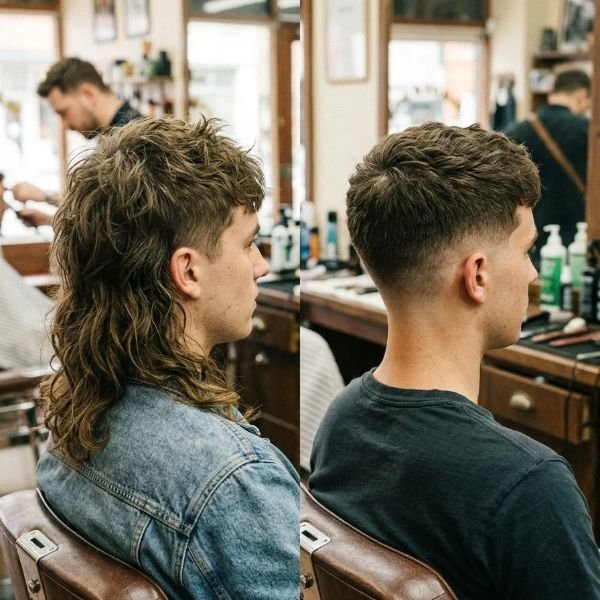
A standard mid taper keeps the same short length all over the top and back. A mid taper mullet leaves the back longer, so it needs more styling and a slower grow out.
Mullet vs Wolf Cut

A wolf cut is a heavily layered shag with a mullet influence. It has more volume all over, while a mid taper mullet has tighter, shorter sides.
Mullet vs Flow Cut

A flow cut is a longer, swept back hair style with natural movement. It has little or no taper, while a mid taper mullet has a defined short side and a longer back.
Frequently Asked Questions
What is a mid taper fade mullet?
It is a mullet with short, tapered sides that start around mid head height, and longer hair at the back.
Where does a mid taper start?
A mid taper usually starts about one to two inches above the ear, near the temple.
How often should I get a trim?
Plan on a taper touch up every four weeks and a back trim every eight to twelve weeks.
What guard numbers should I ask for?
Start with a closed clipper or #0.5 at the bottom and blend up through #1, #2 and #3 into the longer hair.
Does it suit curly hair?
Yes. Curls give the back a strong shape, and the taper keeps the sides tidy.
Is it professional enough for work?
Yes, in the business version. Keep the back short, near the collar, and style the top neatly.
How long does it take to grow a mullet?
Most men need three to six months to grow a usable back section, depending on starting length.
What is the difference between a taper and a fade?
A taper gently shortens hair at the edges, while a fade usually goes shorter, often to skin.
About the Author
[Add your name, years of experience, and credentials here. For example: “Written by [Name], a men’s grooming writer with 20 years of experience in barber culture and hair trends. Reviewed by [licensed barber name].” A real byline and a barber reviewer strengthen EEAT signals.]
Conclusion
The mid taper fade mullet is one of the most practical ways to wear a mullet in 2026. It keeps the sides clean, gives the back a clear shape, and adapts to your hair type, face shape and age.
Choose the style that matches your texture, bring a reference photo, and use the exact guard numbers above. Then commit to a trim every four weeks to keep the blend sharp.

Liam Joseph Miller is a fashion and lifestyle writer passionate about modern trends, personal style, outfit inspiration, and everyday fashion. He enjoys creating simple, practical content that helps readers discover new looks, explore current trends, and express their unique sense of style with confidence.