


Mid taper fade Asian haircuts blend short, clean sides with a longer top that suits straight, thick hair. The cut starts halfway up the head, so it looks sharper than a low taper and softer than a high fade.
In 2026 it is one of the most requested cuts in barbershops because it works for school, the office and weekends. This guide gives you 15 styles, advice by hair type, face shape and age, a barber script and a simple care routine. Read on to find the version that fits your head.
What Is a Mid Taper Fade Asian Haircut?
A taper is a cut where hair gets gradually shorter toward the neckline and ears. A fade goes further and blends down to very short or skin-level length. A mid taper fade starts that blend around the temple and mid-ear line.
Asian hair is often straight, thick and strong, and it tends to grow outward. That makes a clean taper important, because bulky sides can look boxy fast. A good mid taper removes that weight and keeps the top easy to shape.
Why Is This Haircut So Popular in 2026?
Several things keep this cut at the top of the list:
- Balance: It sits between a low taper and a high fade, so it is rarely too bold.
- Korean style influence: K-pop and K-drama looks made soft fringes and layered tops mainstream worldwide.
- Easy upkeep: Most styles need five minutes and one product.
- Flexible length: You can keep the top short for work or grow it for a fringe.
Search interest also leans toward long-tail terms like “Asian mid taper fade straight hair”, which shows men want advice for their own texture, not generic photos.
15 Best Mid Taper Fade Asian Haircut Ideas
Classic and Textured Styles
1. Classic Mid Taper Fade
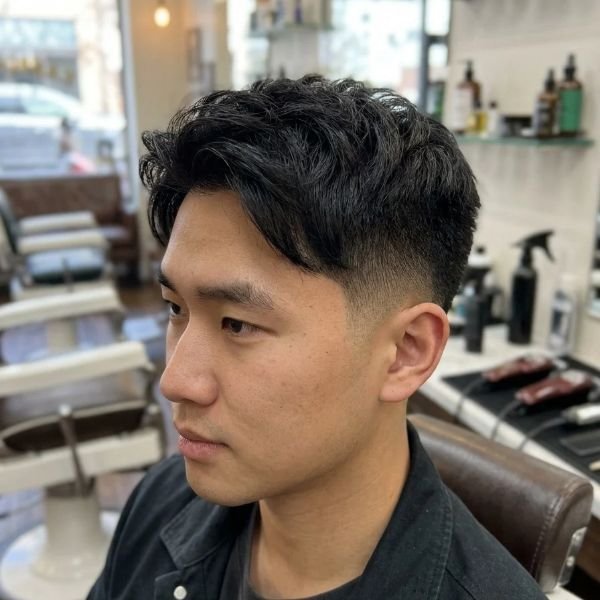
A short, neat top combed to one side with tapered sides. It is the safest first choice and works with a suit.
2. Textured Top Mid Taper
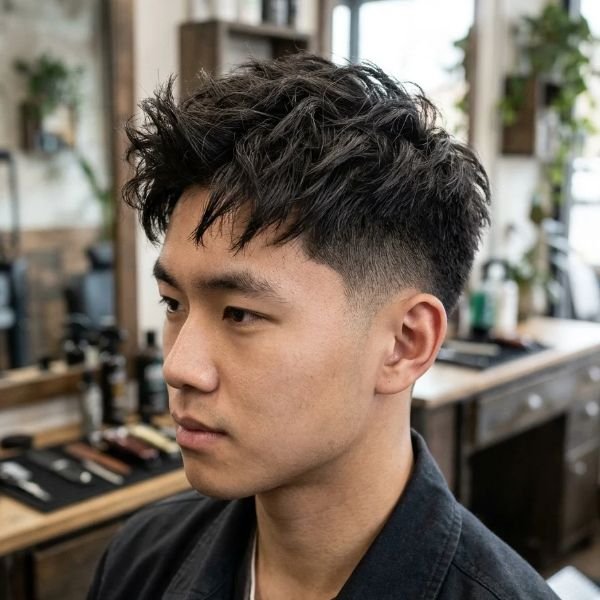
The top is cut in uneven layers, then styled with matte clay. It adds movement to flat, straight hair.
3. Messy Mid Taper Fade
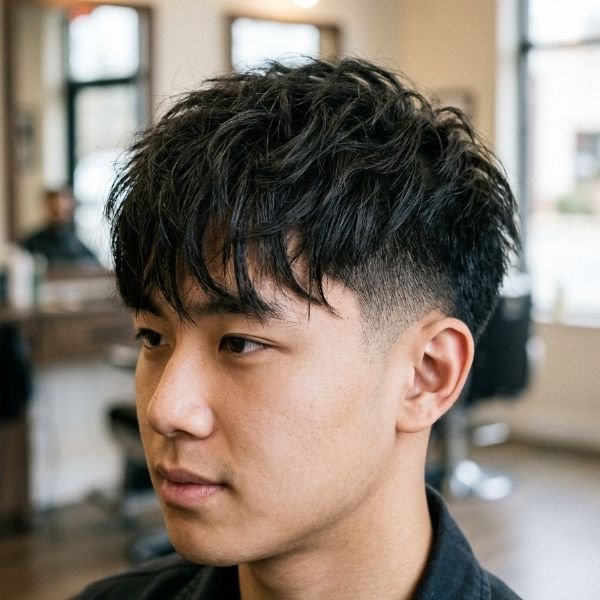
Hair is pushed in different directions for a relaxed, lived-in look. It hides regrowth well.
Korean-Inspired and Two-Block Styles
4. Korean Two-Block Mid Taper
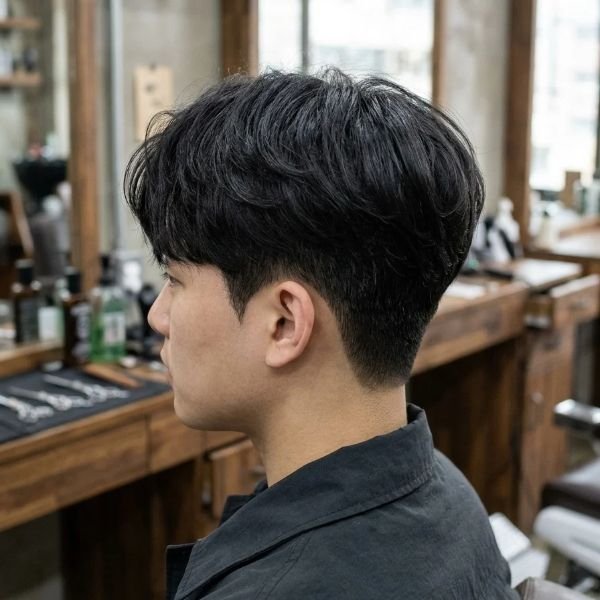
A two-block cut is a Korean-popular style with short sides and a longer top, separated by a clear block. Pairing it with a taper softens the line between the two sections.
5. Middle Part Mid Taper
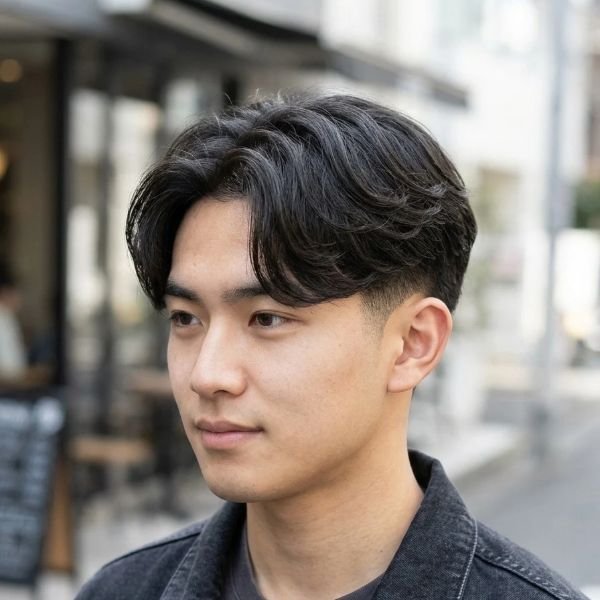
The top splits down the center and falls to both sides. It suits men who want a smooth, face-framing shape.
6. Curtain Fringe Mid Taper
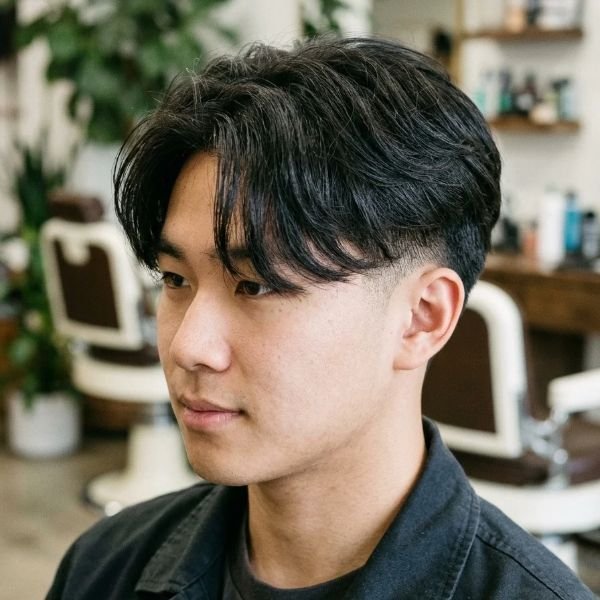
Longer front hair parts in the middle and sweeps outward like curtains. Keep the sides tapered so the fringe stays the focus.
Fringe and Forward Styles
7. Textured Fringe Mid Taper
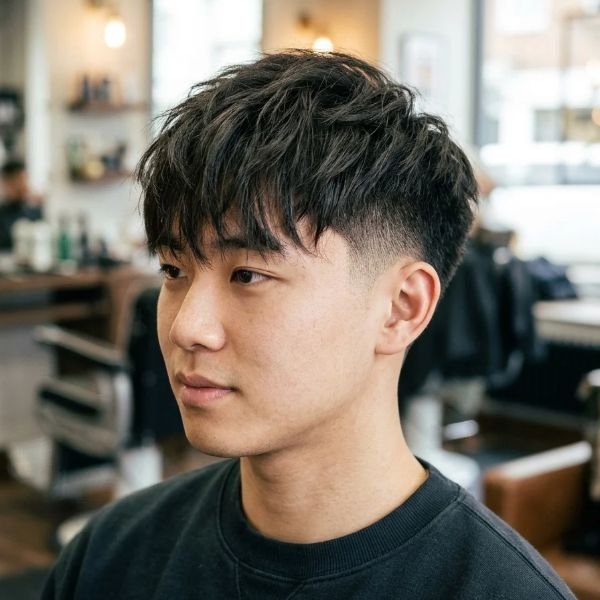
Hair is brushed forward and cut with choppy ends. It gives a youthful look and covers a high forehead.
8. Short Fringe Mid Taper
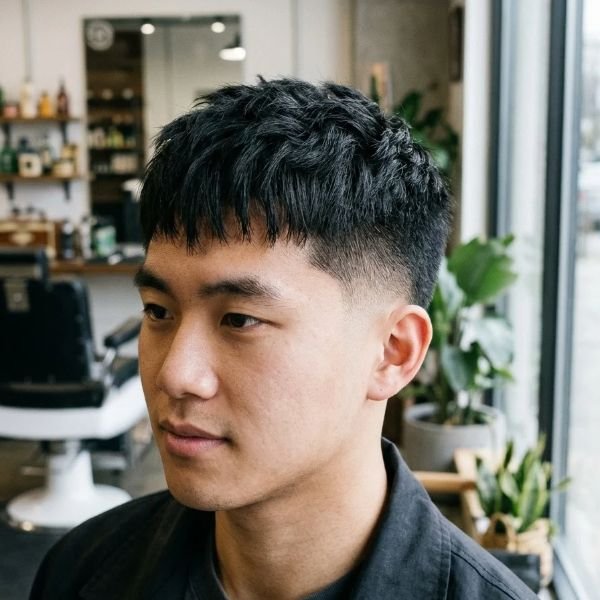
A shorter, blunt fringe sits just above the brows. It is easy to manage and works well on thick hair.
Volume and Styling Styles
9. Quiff Mid Taper
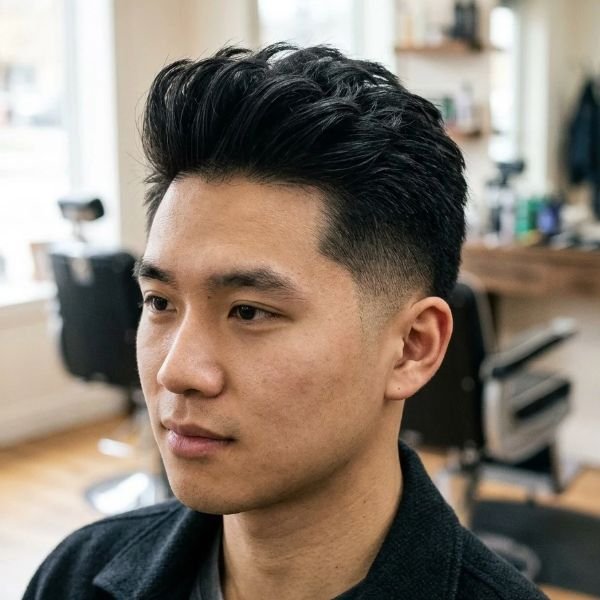
The front is lifted up and back for height. Use a blow dryer and light paste for hold.
10. Fluffy Mid Taper
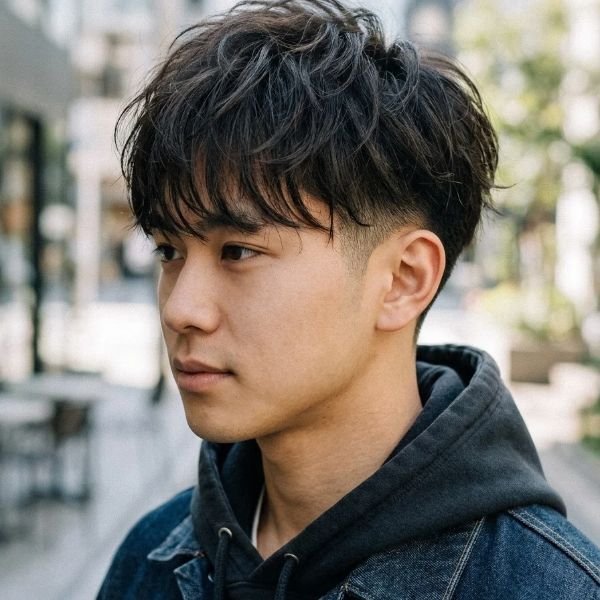
Soft, airy volume with little product. It suits fine or wavy hair that needs body.
11. Blowout Mid Taper
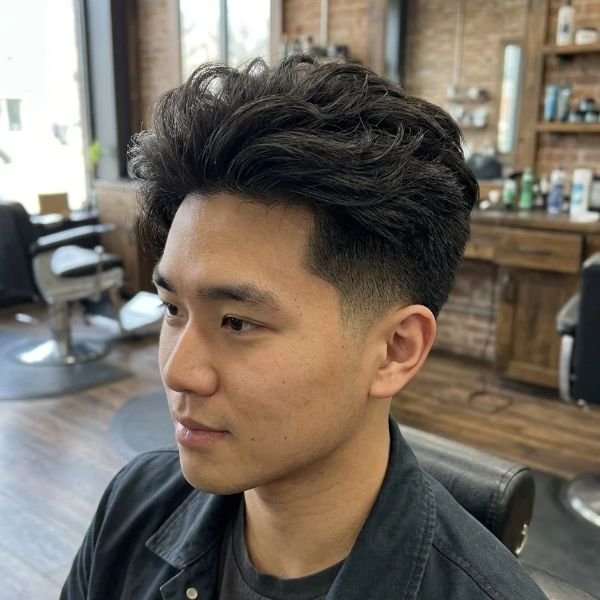
A blowout means drying hair with a brush and heat to lift it from the root. It makes thick Asian hair look fuller and controlled.
Clean and Longer Mid Taper Fade Asian Styles
12. Slick Back Mid Taper
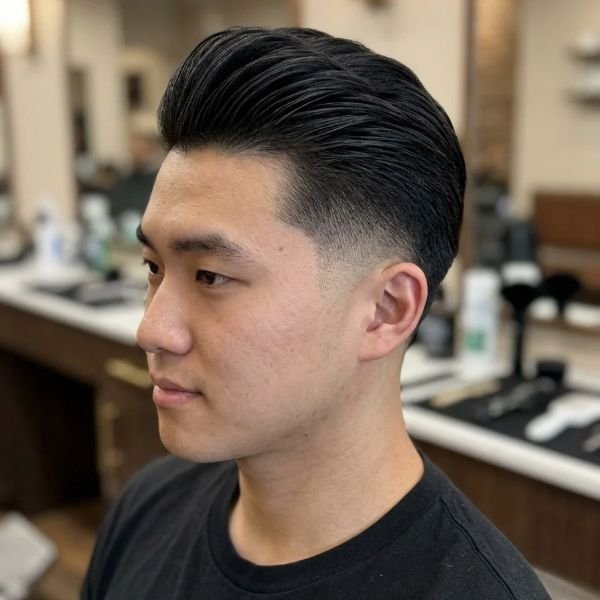
Hair is combed straight back with a shiny or semi-matte finish. It looks sharp for formal events.
13. Side Part Mid Taper
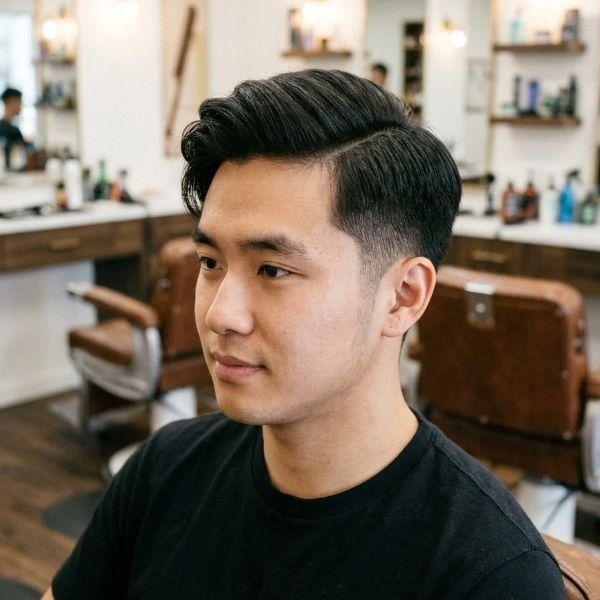
A defined part sits on one side with the top swept across. It is a timeless office haircut.
14. Long Top Mid Taper
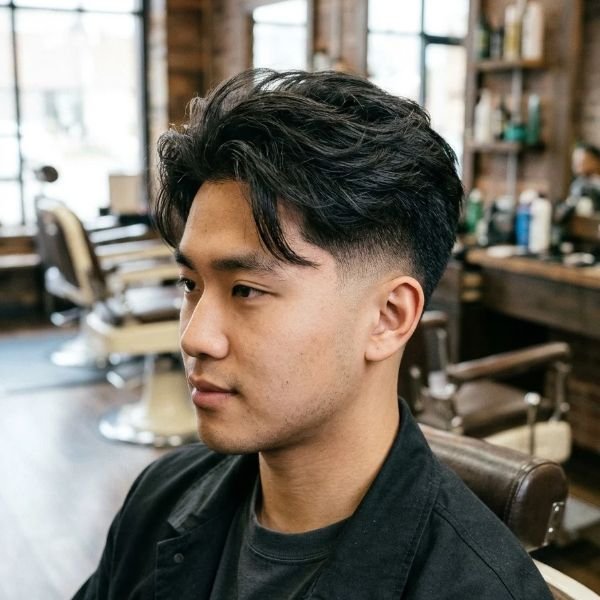
The top stays four to six inches long while the sides remain short. It gives you room to switch styles.
15. Low-Volume Natural Mid Taper
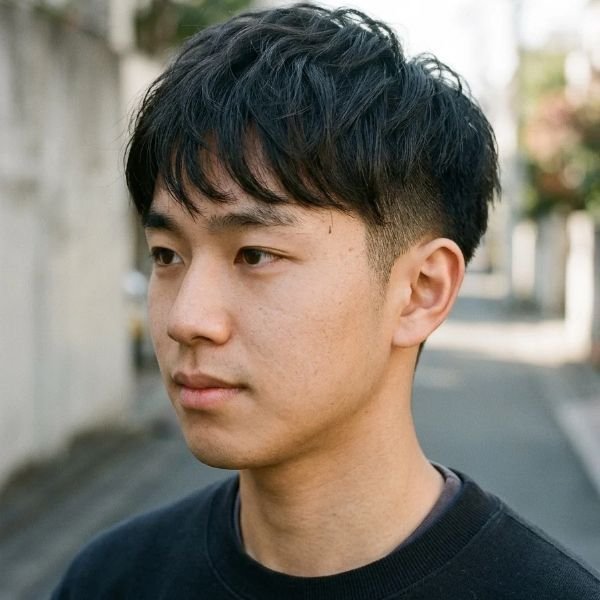
Short, flat and soft, with almost no styling. It is the lowest effort option on the list.
How to Choose the Right Style for Your Hair Type
| Hair Type | Best Styles | Product |
| Straight | Textured Top, Side Part | Clay or paste |
| Wavy | Fluffy, Messy | Sea salt spray |
| Thick | Short Fringe, Blowout | Light cream |
| Fine | Quiff, Fluffy | Volumizing powder |
| Medium length | Curtain Fringe, Middle Part | Pomade |
Straight Hair
Straight hair shows every line, so choose textured layers to avoid a flat look. Matte clay adds grip.
Wavy Hair
Waves add natural volume. Keep the sides tapered and let the top air dry for a soft finish.
Thick Hair
Thick hair needs thinning or layering on top. Without it, the cut can puff out around the sides.
Fine Hair
Fine hair needs lift. Choose shorter lengths with volume powder and avoid heavy wax.
Medium-Length Hair
This length gives you the most options. Try a fringe, middle part or slick back.
Best Mid Taper Fade Asian Styles by Face Shape
Oval Face
Almost any style works. A classic side part keeps proportions even.
Round Face
Add height with a quiff or textured top to make the face look longer.
Square Face
Soften the jaw with a fringe or messy top.
Heart Face
A side fringe balances a wider forehead and narrow chin.
Long Face
Pick a short fringe or low-volume top to avoid adding more height.
Diamond Face
A textured fringe covers wide cheekbones and softens the forehead line.
Rectangular Face
Try a middle part or curtain fringe to add width at the sides.
Best Mid Taper Fade Asian Styles by Age Group
Teenagers
Messy, fluffy and fringe styles are easy to manage and fit school rules in most places.
Young Men
Two-block, blowout and quiff styles let you experiment with trends.
Professional Men
Side part, slick back and classic cuts look polished without trying too hard.
How to Ask Your Barber for a Mid Taper Fade
Clear words save time and prevent a cut that is shorter than you wanted. Follow these steps in order:
- Say “mid taper fade” and show a photo of the exact style.
- Name the guard number for the shortest part, such as a number 1 or 2.
- State where the taper should start, around the temple.
- Tell the barber your preferred top length in inches.
- Mention your hair type, such as thick and straight.
- Ask for texture or thinning on the top if your hair is heavy.
Bring two photos, one front and one side, so the barber can see the blend.
Mid Taper Fade Tutorial: Video Guide
A good tutorial video shows the cut step by step, so you know what to expect in the chair. Search for a recent mid taper fade tutorial on a trusted barber channel and check that it covers these points:
- Sectioning the hair before cutting
- Choosing guard sizes for each zone
- Blending with clippers and a taper lever
- Cutting the top with scissors or a razor
Watch it once before your appointment so you can describe the result in the barber’s own words.
Common Mid Taper Fade Mistakes to Avoid
Most problems come from rushing the decision or skipping upkeep:
- Choosing a style that ignores your face shape
- Using too much product on fine hair
- Waiting more than five weeks between cuts
- Brushing wet hair aggressively, which causes frizz
Common Barber Mistakes to Avoid
Watch for a fade that starts too high, harsh lines at the temple and uneven sides. If you see them, speak up before the cut ends.
How to Maintain a Mid Taper Fade Asian Haircut
Taper Maintenance
Visit the barber every three to four weeks. The sides grow out faster than the top, so the shape loses definition quickly.
Daily Styling
Use a pea-sized amount of product on damp hair. Blow dry the roots first, then add paste for texture.
Shampoo and Conditioner
Wash two to three times a week. Condition the ends to keep thick hair soft.
Heat Protection
Spray a heat protectant before blow drying. It reduces dryness and breakage.
Satin Pillowcase
Satin cuts friction overnight, which helps hold your style and limits frizz.
Sulfate-Free Products
Sulfates are strong cleansers that can dry the scalp. Sulfate-free formulas are gentler for daily care.
Mid Taper Fade vs Other Haircuts
| Cut | Where It Starts | Look |
| Mid taper fade | Temple level | Balanced and clean |
| Low taper | Near the ears and neckline | Subtle |
| Mid fade | Mid-head, down to skin | Bold |
| Two-block | Sharp step between sections | Trendy |
| Undercut | Disconnected sides | Edgy |
Mid Taper Fade vs Low Taper
A low taper stays close to the ears and neckline, so it looks more subtle. A mid taper shows more of the blend.
Mid Taper Fade vs Mid Fade
Both start at the same height. A mid fade goes to skin, while a taper keeps some length on the sides.
Mid Taper Fade vs Two-Block
A two-block has a visible step. A mid taper gives a smoother transition, and you can combine them.
Mid Taper Fade vs Undercut
An undercut removes the connection between top and sides. A mid taper blends them for a softer finish.
Frequently Asked Questions
Is a mid taper fade good for Asian hair?
Yes. It removes bulk from thick, straight hair and keeps the top easy to style.
What is the best style for thick Asian hair?
A textured top, short fringe or blowout works best because layers control the volume.
Does a mid taper work with straight Asian hair?
Yes. Add texture with layering and matte clay so the top does not look flat.
How often should I maintain the taper?
Every three to four weeks keeps the lines clean.
Can I get a mid taper with a two-block haircut?
Yes. Ask for a taper on the sides to soften the block line.
Is a mid taper better than a mid fade?
Neither is better. A taper is softer and a fade is bolder, so choose by how much contrast you want.
How do I style thick straight Asian hair?
Blow dry the roots, then use clay or paste to add texture and hold.
Does a mid taper fade work for Asian hair?
It does, and it is one of the most flexible cuts for this hair type.
How do I style a mid taper fade on thick Asian hair?
Thin the top slightly, dry it with a brush, and finish with a light matte product.
How often should I get a taper touch-up for Asian hair?
Aim for every three to four weeks, as fast-growing sides lose shape quickly.
What should I tell my barber for an Asian mid taper fade?
Say “mid taper fade,” name your guard number, taper start point and top length, and bring photos.
Conclusion
The mid taper fade gives Asian men a clean, flexible and low-effort cut. Pick a style that matches your hair type and face shape, give your barber clear instructions, and book regular touch-ups. Start with a classic or textured version, then try a fringe or two-block once you know what suits you.

Liam Joseph Miller is a fashion and lifestyle writer passionate about modern trends, personal style, outfit inspiration, and everyday fashion. He enjoys creating simple, practical content that helps readers discover new looks, explore current trends, and express their unique sense of style with confidence.